
By: SELF4Kids Editorial Team
Published: August 19, 2026
Last updated: August 19, 2026
Expert reviewed by: Not assigned. Add a reviewer only after a qualified professional has reviewed the final article.
Your child watches two children building a tower but cannot quite figure out how to join. Or a board game ends in frustration because someone changed the rules. These ordinary moments can leave parents wondering whether they should step in, what to say, and how much help is helpful.
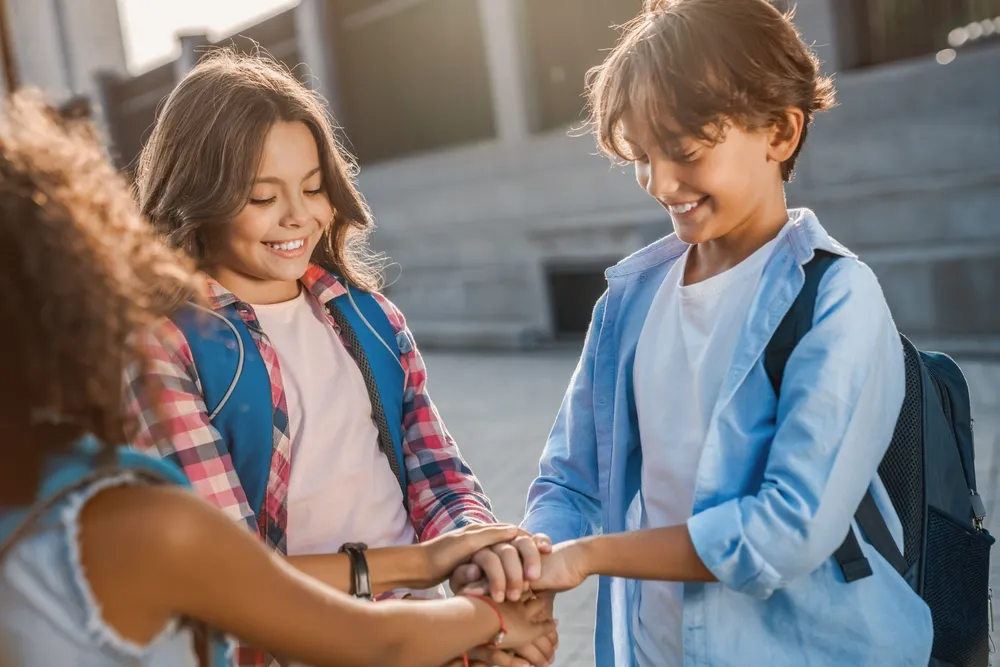
Social skills for kids are learned abilities that help children communicate, listen, cooperate, understand feelings, respect boundaries, solve interpersonal problems, build friendships, and participate in groups. Children develop these skills gradually through observation, guidance, play, conversation, mistakes, and repeated practice with other people.
The goal is not to turn every child into the most outgoing person in the room. It is to give children practical tools for connecting with others while still being themselves.
Contents
- 1 What Are Social Skills for Kids?
- 2 Why Social Skills Matter During the Elementary Years
- 3 Important Social Skills for Children Ages 4–9
- 4 Social Skills by Age
- 5 Practical Social Skills Activities Parents Can Try at Home
- 6 What Parents Can Say in Difficult Social Moments
- 7 Common Mistakes That Can Make Social Practice Harder
- 8 How Group Activities and After-School Programs Can Help
- 9 How the S.E.L.F. Framework Supports Social Development
- 10 When Parents May Want Additional Guidance
- 11 Choosing a Socially Supportive Program in Irvine
- 12 Helping Social Skills Grow One Interaction at a Time
- 13 Frequently Asked Questions
- 13.1 What are the most important social skills for kids?
- 13.2 At what age do children begin developing social skills?
- 13.3 Can social skills be taught?
- 13.4 How can I help my child make friends?
- 13.5 What activities improve children’s communication skills?
- 13.6 How can after-school programs help children develop social skills?
- 13.7 What should I do if my child avoids group activities?
- 13.8 How long does it take for a child to improve social skills?
- 14 Sources
What Are Social Skills for Kids?
Social skills are the behaviors and communication abilities children use when interacting with other people. They include listening, taking turns, expressing needs, noticing another person’s perspective, working as part of a team, solving disagreements, asking for help, and respecting personal boundaries.
CASEL includes skills such as clear communication, listening, cooperation, constructive conflict negotiation, and seeking or offering help within its relationship-skills framework.
Most importantly, social skills are skills, not personality traits.
A child does not need to be highly talkative or eager to meet every new person to be socially capable. A quieter child may be an excellent listener, a thoughtful friend, a respectful teammate, and an effective communicator. Temperament differs among children, so parents can focus on useful behaviors rather than measuring social success by how outgoing a child seems.
Like other life skills children practice over time, social abilities grow through everyday experiences.
Why Social Skills Matter During the Elementary Years
Between preschool and the elementary years, children’s social worlds expand. They participate in classrooms, playground games, sports, projects, birthday parties, clubs, camps, and friendships that require increasingly complex communication.
Social skills can help children:
- enter play and group activities
- listen while another person is speaking
- communicate ideas and needs
- ask teachers or other adults for help
- work on shared projects
- manage disagreements without ending a friendship
- understand perspectives different from their own
- make decisions with other people
- recover after an uncomfortable social moment
HealthyChildren notes that school-age friendships often require adult support and role-modeling, particularly when children are learning to handle anger, disagreement, rejection, and different friendship styles.
These abilities also overlap with social-emotional learning. CASEL describes social awareness, relationship skills, self-management, self-awareness, and responsible decision-making as interconnected areas of development.
Important Social Skills for Children Ages 4–9
Parents do not need to teach every skill at once. Notice which situations are hardest for your child, choose one small behavior to practice, and give it repeated opportunities to become more familiar.
| Social skill | What it may look like | Simple way to practice it |
| Active listening | Looking or orienting toward a speaker, waiting, responding to what was said | Take turns telling a 30-second story and asking one question |
| Turn-taking | Waiting while someone else participates | Play a simple card or board game |
| Joining a group | Watching first, approaching, and asking to participate | Role-play joining a playground game |
| Expressing needs | Using words instead of expecting others to guess | Practice “Can I have a turn when you’re done?” |
| Recognizing emotions | Naming feelings in oneself or others | Discuss facial expressions in books |
| Empathy | Considering how another person may feel | Ask, “What might they be feeling?” during stories |
| Teamwork | Sharing ideas and completing a task together | Build something with one shared set of materials |
| Flexibility | Accepting a new idea, rule, role, or plan | Change one rule in a familiar game |
| Boundaries | Saying no respectfully and respecting another person’s no | Practice “Please stop. I don’t like that.” |
| Problem-solving | Suggesting more than one solution | Brainstorm three ways to solve a family disagreement |
| Apologizing | Naming what happened and trying to repair it | Practice “I’m sorry I grabbed it. Can I give it back?” |
| Recovering after conflict | Returning to play or conversation after a disagreement | Discuss what someone could say after cooling down |
Social Skills by Age
Age ranges are useful guides, not pass-or-fail tests. Children develop at different rates, and temperament, experience, language, context, and many other factors influence how social skills appear.
Ages 4–5: Learning the Basics Through Play
At this age, practice often centers on entering play, taking turns, using words to express wants, recognizing basic emotions, comforting others, following simple group rules, and beginning to solve conflicts with adult support.
CDC milestones for ages 4 and 5 include behaviors such as asking to play with other children, comforting someone who is hurt or sad, and following rules or taking turns in games. These milestones describe skills most children demonstrate by those ages, not a checklist for judging an individual child.
Keep practice concrete. “What can you say if you want the blue block?” is usually more useful than a long explanation about cooperation.
Ages 6–7: Practicing Friendship and Cooperation
Children in the early elementary years encounter more shared rules, group learning, friendship decisions, and disagreements outside a parent’s immediate supervision.
Useful practice may include:
- asking follow-up questions
- taking another person’s idea seriously
- compromising
- dealing with losing a game
- noticing when someone wants space
- repairing small friendship conflicts
- asking an adult for help when a problem cannot be solved safely
Adults can still coach friendship skills rather than expecting children to simply “work it out” every time.
Ages 8–9: Handling More Complex Perspectives
As children’s social worlds expand, differences in opinions, backgrounds, interests, and expectations become more noticeable. An AAP resource for 8-year-olds notes that encountering different beliefs and practices can produce conflict while also giving children opportunities to practice reasoning and problem-solving.
At this stage, parents can practice respectful disagreement, perspective-taking, group decision-making, more meaningful apologies, leadership, boundaries, and returning to a friendship after conflict.
Practical Social Skills Activities Parents Can Try at Home
The most useful activities feel like practice, not a lecture. Play, stories, shared challenges, and conversation give children chances to try a social behavior and receive supportive feedback. HealthyChildren and Harvard resources both emphasize learning through interaction, play, and practice.
1. Role-Play Joining a Game
Teaches: Joining groups and conversation confidence
How: Pretend you are already playing. Let your child watch briefly, approach, and try a phrase such as, “Can I play too?”
Time: 3–5 minutes
Adjust: Ages 4–5 can practice one sentence. Older children can practice noticing what the group is doing before deciding how to join.
2. Conversation Turn-Taking
Teaches: Listening and two-way conversation
How: Choose a fun topic. Each person speaks briefly, then asks the other person one related question.
Time: 5 minutes
Adjust: Younger children can use prompts. Older children can practice keeping the conversation on topic for several turns.
3. Emotion Charades
Teaches: Emotional awareness and nonverbal cues
How: Act out an emotion without naming it. Everyone guesses and explains which clues they noticed.
Time: 5–10 minutes
Adjust: Begin with happy, sad, angry, and surprised. Add disappointed, nervous, proud, embarrassed, or frustrated for older children.
4. Cooperative Building Challenge
Teaches: Teamwork, communication, and compromise
How: Build a tower, bridge, LEGO creation, or cardboard structure together using shared materials. Give everyone a role.
Time: 10–20 minutes
Adjust: Younger children can take turns placing pieces. Older children can plan before building and revise the plan together.
5. Family Problem-Solving
Teaches: Conflict resolution
How: Pick a low-stakes issue such as choosing a weekend activity. Ask everyone for one idea, then work toward a solution.
Time: 5–10 minutes
Adjust: Younger children choose between two options. Older children can propose compromises.
6. Board or Card Games
Teaches: Turn-taking, rules, patience, and recovering from disappointment
How: Choose a short game and focus more on respectful participation than winning.
Time: 10–20 minutes
Adjust: Keep games short for younger children. With older children, occasionally discuss how to respond when a rule is confusing or someone makes a mistake.
7. Compliment Circle
Teaches: Noticing positive qualities in others
How: Each family member names something specific they appreciated about another person.
Time: 3–5 minutes
Adjust: Younger children can complete “I liked when you…” Older children can name effort, kindness, creativity, or teamwork rather than appearance.
8. Story Perspective-Taking
Teaches: Empathy and flexible thinking
How: Pause during a book or show and ask what two different characters may be thinking or feeling.
Time: 5 minutes
Adjust: Younger children identify emotions. Older children explain why two people can interpret the same event differently.
Teaches: Leadership, responsibility, and collaboration
How: Plan something small together, such as packing a picnic, organizing game night, or preparing a snack. Decide who does what.
Time: 10–20 minutes
Adjust: Give younger children one clear responsibility. Let older children help organize the sequence and divide roles.
10. Calm Conflict Practice
Teaches: Assertive communication
How: Practice one sentence for disagreement while everyone is calm.
Time: 2–3 minutes
Adjust: Start with “I don’t agree. Can we try another way?” Older children can practice explaining their view without insulting the other person.
What Parents Can Say in Difficult Social Moments
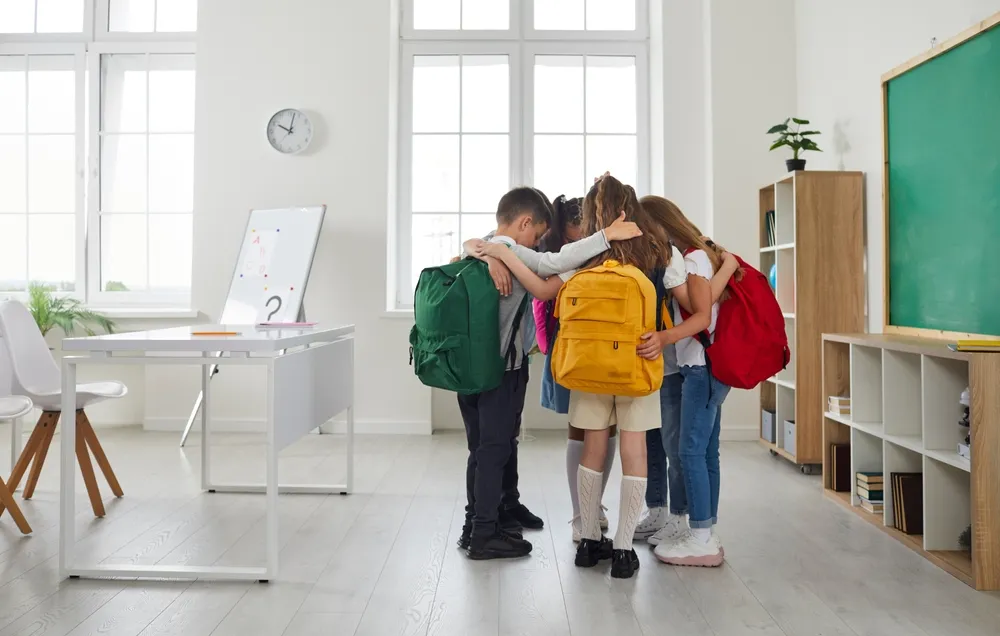
Children often benefit from short language they can remember under pressure. Practice these when everyone is calm.
Joining an activity:
“Can I play too?”
“What are you building? Can I help?”
Asking for a turn:
“Can I have a turn when you’re finished?”
Disagreeing respectfully:
“I have a different idea.”
“Can we find a way that works for both of us?”
Setting a boundary:
“Please stop. I don’t like that.”
“I need some space.”
Apologizing:
“I’m sorry I did that. How can I fix it?”
Responding to rejection:
“Okay. I’ll find something else to do.”
“Maybe we can play another time.”
Asking an adult for help:
“We tried to solve it, but we still need help.”
The goal is not to make children memorize perfect lines. A script simply gives them a starting point until their own words become easier.
Common Mistakes That Can Make Social Practice Harder
Parents usually step in because they want to help. A few small adjustments can make that support more useful.
Forcing immediate interaction
A child standing at the edge of a group may be observing before participating. Offer a strategy without demanding instant engagement.
Speaking for the child too quickly
If the situation is safe, give your child a few extra seconds to answer, order, greet someone, or ask a question before stepping in.
Comparing children
“Your sister makes friends easily” does not teach a skill. Replace comparison with something specific: “Let’s practice how you could ask to join.”
Turning personality into a label
Words such as “shy,” “bossy,” “difficult,” or “antisocial” can make a temporary behavior sound like an identity. Describe the skill instead: “Joining a new group feels hard right now.”
Expecting adult-level emotional control
Young children are still developing self-regulation and flexible thinking. Harvard’s Center on the Developing Child notes that executive-function and self-regulation capacities develop through experience and practice rather than arriving fully formed.
Correcting every interaction
Children need room to play without receiving a performance review afterward. Choose the moments where coaching will matter most.
Teaching only through lectures
Talking has value, but real practice gives children the opportunity to try listening, sharing, compromising, leading, and recovering after mistakes.
How Group Activities and After-School Programs Can Help
Social skills need other people.
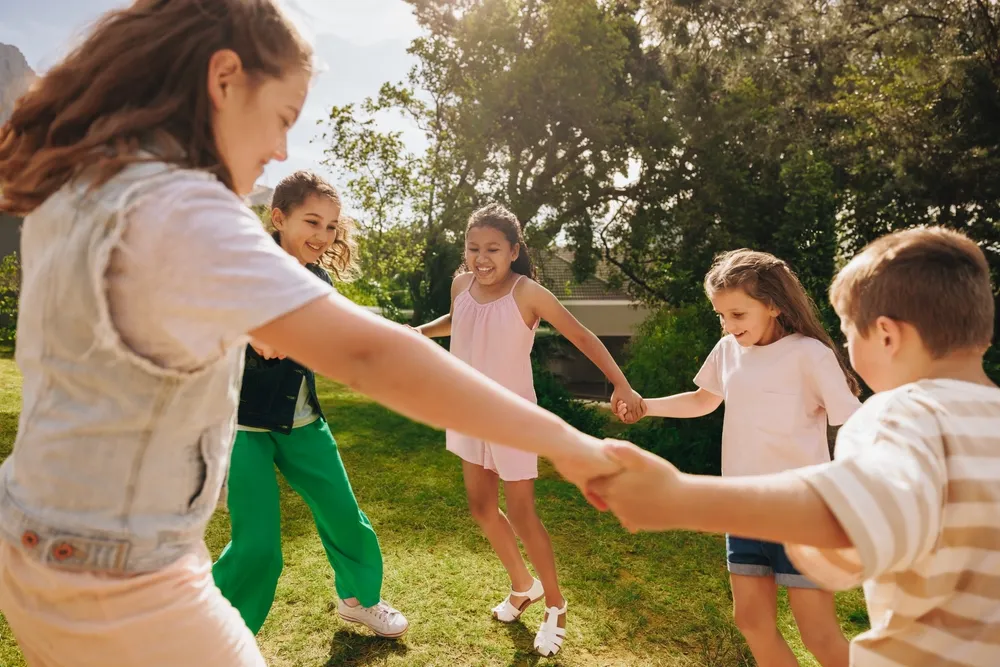
A structured group setting creates repeated chances to communicate, cooperate, wait, share ideas, handle different personalities, solve problems, take responsibility, and try again after something does not go smoothly.
That does not mean every group program is a “social-skills program,” nor does enrichment replace clinical care when a child needs it. It means thoughtfully guided group activities can provide natural opportunities for social practice.
At SELF4Kids, the current afterschool program in Irvine describes a safe, structured environment with personalized guidance and enrichment that includes arts and crafts, music, dance, sports, and STEM projects. The program connects these experiences with creativity, critical thinking, teamwork, leadership, and problem-solving.
A STEM challenge, for example, is not only about building something. Children may need to explain an idea, listen to a teammate, adapt when a design does not work, divide responsibilities, and decide what to try next.
A sports or movement activity can similarly create opportunities to follow shared rules, encourage teammates, handle disappointment, and participate as part of a group.
If your family is exploring structured opportunities for communication and teamwork, you can review the SELF4Kids afterschool program and consider whether its variety of group enrichment activities fits your child’s interests.
How the S.E.L.F. Framework Supports Social Development
SELF4Kids organizes its approach around Skills, Endurance, Leadership, and Flexibility. The current SELF4Kids site describes these pillars through hands-on skill development, perseverance, communication and collaboration, decision-making, empathy, adaptability, creative problem-solving, and respect for different perspectives.
Skills
The Skills pillar includes practical abilities such as communication, problem-solving, critical thinking, and teamwork.
Socially, that can mean expressing an idea clearly, listening to another child, noticing a problem, and suggesting a solution.
Endurance
Social situations do not always work the first time.
A child may lose a game, disagree with a teammate, hear “not right now,” or need to try a different approach. Endurance means practicing persistence and learning to continue after manageable setbacks.
Leadership
Leadership for young children does not need to mean being in charge.
It can look like listening, communicating, including someone else, taking responsibility, making a respectful decision, or helping a group move forward.
Flexibility
Groups require children to encounter ideas that are not their own. Flexibility includes adapting, considering another perspective, trying a different plan, and finding a workable compromise.
Imagine four children completing a building challenge. They first need Skills to communicate ideas. They use Endurance when the structure falls. Someone practices Leadership by helping the group decide what to try next. Everyone uses Flexibility when the original plan needs to change.
That is social learning inside a meaningful activity rather than a lecture about “being social.”
When Parents May Want Additional Guidance
Variation in social development is normal, and one difficult friendship, a quiet personality, or occasional conflict does not by itself indicate a disorder.
Parents may want to speak with a teacher, school counselor, pediatrician, or qualified child-development professional when concerns are persistent, cause significant distress, or begin interfering with a child’s regular participation at school, home, friendships, or activities.
HealthyChildren advises parents to gather information from school when peer problems form a pattern and to consult a pediatrician when concerns continue. The AAP also recommends discussing emotional or behavioral concerns when they occur more often than usual and interfere with regular functioning.
This article is educational guidance. It is not a diagnostic tool or substitute for individualized medical, developmental, or mental-health advice.
Choosing a Socially Supportive Program in Irvine
When comparing an after-school or enrichment program, look beyond the activity list.
Ask:
- Is the environment physically and emotionally safe?
- Are activities appropriate for my child’s age and abilities?
- Do instructors model respectful communication?
- Do children have real opportunities to cooperate rather than simply work beside one another?
- Is individual guidance available when a child needs help entering an activity or resolving a problem?
- How do adults respond when children disagree?
- Are different personalities, cultures, interests, and backgrounds welcomed?
- How does the program communicate with parents and caregivers?
- Is the program educational enrichment, a therapeutic service, or both?
- Are its claims consistent with what the program actually provides?
SELF4Kids describes its learning environment as safe, nurturing, inclusive, structured, and focused on academic, social, emotional, and personal development. Parents who are comparing options can also review why SELF4Kids describes its approach differently.
The right choice is not necessarily the program with the longest activity list. Look for an environment where the activities your child enjoys also create meaningful chances to participate, communicate, solve problems, and connect with others.
Helping Social Skills Grow One Interaction at a Time
Children do not need perfect social behavior.
They need opportunities to practice.
A playground disagreement can become practice in conflict resolution. A family board game can become practice in turn-taking. A group project can become practice in listening and compromise. A difficult first attempt at joining a game can become a chance to try different words next time.
Parents can support social skills for kids by keeping the goal small and concrete: one phrase, one behavior, one situation, repeated over time.
Structured enrichment can add another layer by giving children regular opportunities to use those skills with peers while exploring different interests.
For Irvine families who want to explore that kind of environment, review the current SELF4Kids enrollment options or contact SELF4Kids with questions about current programs.
The current SELF4Kids website lists the center in Irvine, CA 92603, with phone number 949-678-9980 and email info@self4kids.com.
Frequently Asked Questions
The most important social skills for kids include communication, listening, cooperation, empathy, turn-taking, boundaries, flexibility, problem-solving, and conflict resolution. The exact priority depends on the child and situation. Instead of trying to practice everything at once, parents can identify one recurring challenge, such as joining play or handling disagreement, and practice the specific behavior that would help.
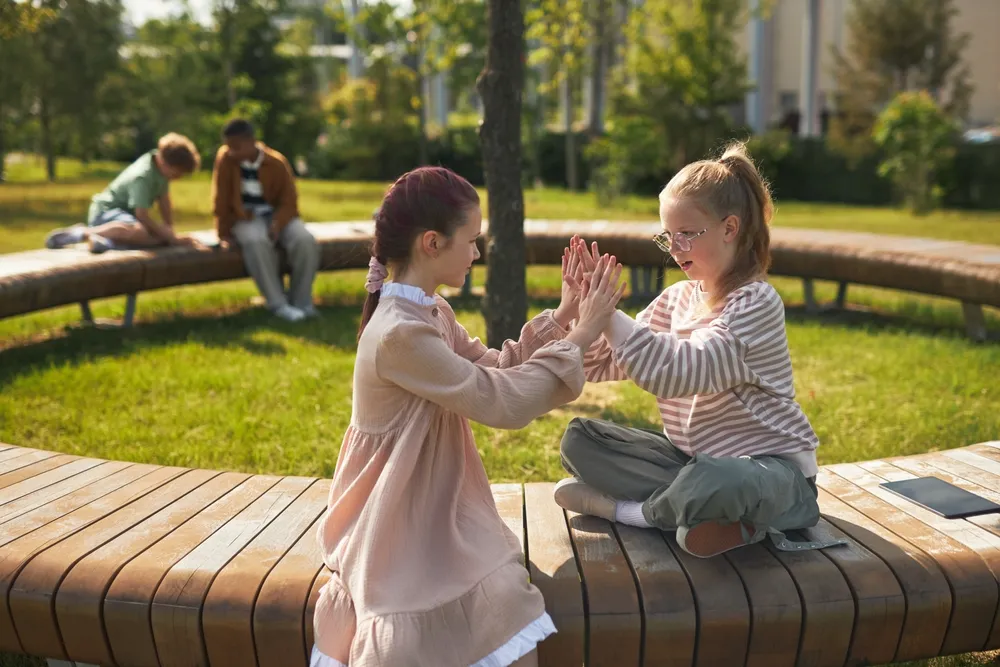
Children begin developing social abilities very early, and these skills continue becoming more complex as they grow. By the preschool years, many children are practicing peer play, turn-taking, emotional awareness, helping behavior, and group rules. During the elementary years, friendship, perspective-taking, cooperation, problem-solving, and conflict repair become increasingly important. Development varies, so age ranges should be treated as guides rather than rigid deadlines.
Yes, many social skills can be taught and strengthened through modeling, coaching, practice, and real interaction. Parents can role-play a difficult situation, model respectful disagreement, provide a short script, practice during games, and talk through what happened afterward. Children also need authentic opportunities with other children because communication, cooperation, and conflict resolution are learned partly by using those skills in real situations.
How can I help my child make friends?
Start by practicing the specific steps involved in friendship rather than simply telling your child to “make friends.” Practice greetings, joining an activity, asking questions, suggesting shared activities, listening, and dealing with small disagreements. Parents can also create manageable opportunities to interact with peers around interests the child already enjoys. Friendship coaching should support the child without forcing a particular personality style.
What activities improve children’s communication skills?
Activities that require children to listen and respond to another person are especially useful for communication practice. Try role-play, storytelling, cooperative building, board games, family planning tasks, pretend play, team challenges, and conversations where each person asks a follow-up question. The activity matters less than creating genuine back-and-forth communication and giving children chances to explain ideas, listen, clarify, and respond.
After-school programs can provide repeated opportunities to practice social skills when activities involve meaningful interaction with peers. Team projects, sports, games, arts, STEM challenges, and other collaborative experiences can require children to communicate, share responsibilities, adapt, solve problems, and handle different ideas. Parents should look for structured, respectful adult guidance rather than assuming that simply placing children together automatically teaches social skills.
What should I do if my child avoids group activities?
Begin by finding out what part of the group experience feels difficult instead of forcing immediate participation. A child may be unsure how to enter the activity, uncomfortable with a large group, unfamiliar with the rules, or simply need time to observe. Practice one manageable step in advance. If avoidance is persistent, causes significant distress, or interferes with regular participation, discuss the pattern with the child’s teacher or pediatrician.
There is no universal timeline for improving social skills. Progress depends on the specific skill, the child’s age and temperament, opportunities to practice, the setting, and how difficult the situation feels. A better goal than expecting change by a particular date is to look for small signs of greater independence, such as trying a practiced phrase, recovering more easily from a disagreement, or needing less adult prompting over time.
Sources
- Centers for Disease Control and Prevention, developmental milestones for ages 4 and 5.
- American Academy of Pediatrics / HealthyChildren.org, preschool social development, school-age friendships, peer challenges, and emotional development.
- Collaborative for Academic, Social, and Emotional Learning, CASEL SEL Framework and relationship skills.
- Harvard Center on the Developing Child, executive function and self-regulation.
- SELF4Kids official website, program, S.E.L.F., and contact information.
Author Bio
SELF4Kids Editorial Team creates educational resources for parents about children’s enrichment, communication, confidence, leadership, social development, and practical life skills. Editorial content should be reviewed for factual accuracy and updated when SELF4Kids program information changes.